If you follow this blog, you are probably like me. You want to reduce waste. You things to be as simple and efficient as possible. If you are also like me, the likelihood of a Martha-Stewart-style makeover is not in the offing. Instead, you make small changes a little at a time and gradually get to where you want to be.
My journey towards a waste-free life is taken in baby steps. For folks like me, I'm introducing the Easy Peasy series. From time to time I will post a simple, single step to help reduce waste. I hope you enjoy this, and would love to hear any suggestions that you folks might have along the way.
Monday, June 17, 2013

Friday, May 31, 2013
Time Saver: Conquering the Mess of Natural Peanut Butter.
I prefer natural peanut butter to supposedly "normal" peanut butter. I like the very peanutty taste, and I like the fact that nothing is in it but peanuts and salt as opposed to those of "normal" that can include things like molasses and hydrogenated palm oil. The only draw back of natural peanut butter is that the oil separates from the peanut solids and looks like this:

Photo by Timothy Valentine
No matter how hard I try, when ever I try to stir this peanut butter, I end up with a big, gloppy oil mess. Not only is this something I don't want to clean up, but if you lose too much peanut oil, the peanut solids become unspreadable.
Now there are gizmos, such as this one at Lehman's that are intended to remedy that situation. You screw the lid on the top and a corkscrew mechanism stirs everything together. The only problems with this are that the lid doesn't fit every jar, so it might not work for your brand or your homemade container and you also have a corkscrew thingy to clean when you're done.
I tried putting it in the fridge before opening it, but that just created a solid mass of peanut oil at the top of the container (which is about as appealing as eating vasoline.) And then it hit me: I put the lid on the jar tightly and put it in the fridge UPSIDE DOWN. When I opened it later, it was mixed perfectly and the consistency was just right. No mess, no waste, no clean up! Ta Da!
Tuesday, May 28, 2013
Of Course I Can!

Poster from the USDA "Beans and Bullets" exhibition
While we don't have to worry about ration points today, home canning serves much the same purpose today. We are taking responsibility for feeding our families with our own hands and avoiding the corporate production of food. I understand that gardening and canning aren't possible for everyone, but for those of us who can, we should can! It saves money and worry over what is in our food.
Saturday, March 2, 2013
Reducing Phone Book Waste
 |
| Creative Commons Image by Gentle |
If you still use the paper books, you can check with the folks at Earth 911 for local recycling resources. And of course, you can also find ways to reuse them in your home. (Hint: They make great booster seats.)
Friday, December 28, 2012
The Fridge that Ate Cinncinnati
 |
| Eric Schmuttenmaer/Flickr/Creative Commons license |
Okay, my fridge isn't really the star of a B movie. But it could have certainly been mistaken for one if you took closeups of the mold and ooze growing there. I bet what happened to me has happened to many of you as well.
I thought that I had a fair amount of food in the fridge. But once I removed the desiccated peas, slimy peppers, furry sweet potatoes and other lovely tidbits I found myself staring at a carton of eggs, half a gallon of milk, and condiments. I did compost most of what I pulled out, so that was some help. But it was still disgusting and it was still a waste of food. I'm not bringing this up so I can whine about my first world problem (that I could have enough food that it would actually have time to spoil in the refrigerator). I'm bringing it up so that I can share the situations that seem to lead to Furry Fridge Syndrome in our house and some possible solutions I've brainstormed.
Situation 1: single serving leftover
A lot of our toxic leftovers come from when have had a family supper and there is enough food left for one serving (or maybe two). So we wrap it up and stick it in the fridge. Then the next day, we prepare an entire new meal because the leftover isn't enough for everyone. Eventually it gets pushed to the back of the fridge and is forgotten.
I've thought about a few different ways to solve this issue, such as freezing the food immediately, or packing it in a plastic container right away for my husband to take into work the next day. But I really think the best solution is just to prepare smaller meals. This also means less overeating. If we are still a little hungry at the end of a meal, we can supplement with something like a piece of fruit.
Situation 2: the new food
I have been known to buy food because it is something new or unusual. Sometimes this is a new piece of produce or an ingredient that I've heard about on a cooking show and so I buy it on impulse. But then I get it home and don't know what to do with it. And so the strange vegetable or new condiment sits there until it expires and I admit defeat. The solution for this is simple. I won't buy anything I'm not confident about cooking unless I've got a specific recipe and a plan to use it.
Situation 3: overbuying
Sometimes I get a really good sale and buy more than we can eat right away. Again, the solutions here are simple. Buy non-freezable things like cucumbers and lettuce in small quantities. With freezable items, I need to avoid buying large quantities unless I have a plan and the time to divide and freeze everything.
Situation 4: the feast that doesn't leave
When my family gets together for holiday meals, we have a LOT of food. I'm sure we aren't the only ones that find ourselves on day 3 of leftovers with no end in sight. I think the best plan for this must be to create an exit plan for leftovers before the meal is started. Buy plenty of freezer bags or containers and be prepared to divide and conquer that afternoon. Also be careful of how many dishes you prepare that don't freeze well and have a short refrigerator life.
Hopefully these solutions will prove useful for your family. It would be great if you would share the situations that lead to Furry Fridge Syndrome in your house, and strategies you've used to overcome the ick.
Sunday, December 16, 2012
Unwrapping the Holidays
 |
| Image courtesy of Whitney at Reviving Homemaking |
 |
| Image by House of Humble |
2. Opt for gift bags and boxes instead of wrapping paper and reuse them. I have an old suitcase where I store all the boxes and bags from gifts I receive. Then when it is time to give a gift, I try to find what I need in the suitcase. I also try to buy gift bags that aren't clearly connected to a particular holiday or occasion. That way a single bag could work for a birthday, and anniversary, or any other special occasion.
3. Consider making the wrapping part of the gift. So you might wrap a pair of mittens and hat inside a scarf. Or you could give a quilter a gift wrapped in fabric.
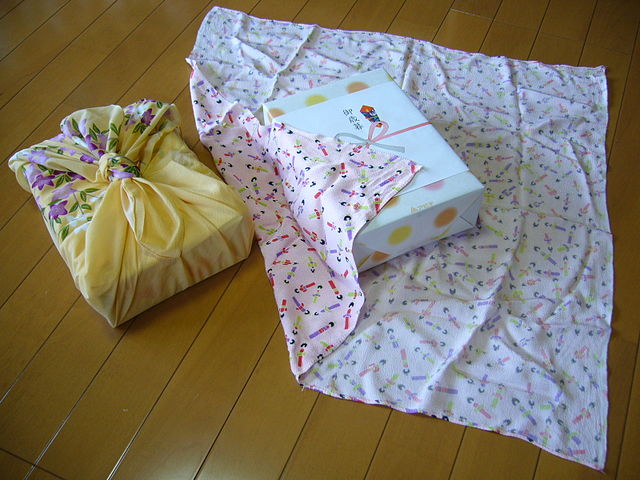
*image by katorisi, creative commons
Saturday, December 8, 2012
Junk Your Junk Mail.

*image mirvettium, creative commons
Most
people are no fans of junk mail. Besides all the clutter it causes in your
house, junk mail can be a big waste of paper and resources. One way to manage
all that junk mail is using the reduce, reuse, recycle model to effectively
attack the pile.
1.
Reduce the amount of mail coming into your house. You can go to the Consumer Credit Reporting website to opt out of receiving pre-screened credit card and insurance offers (for five years or permanently.)
You can go to the Direct Marketing Association to request all mail stopped from
businesses that belong to the association. Not all
companies will be connected to Consumer Credit Reporting or the DMA, but taking those two steps should reduce your
volume.
2.
Reuse your junk mail when possible. Use the backs
of envelopes for shopping lists. Let your kids make collages, papier mache or
other crafts. Running it through a shredder adds to the possibilities. Paper
shreds can make packing material, hamster cage lining, or campfire starters.

*Paper beads, Creative Commons Image by Bernie Jersey
*Paper beads, Creative Commons Image by Bernie Jersey
3. Make sure to recycle whatever is
left. For a doubly positive effect, take your paper recycling to a Paper
Retriever bin. Organizations like schools and churches often have
these big green bins in their parking lots. The Paper Retriever company
periodically picks up the paper and gives the organization a portion of the
money raised by selling the paper to recycling centers. That way you have
recycled the paper and have contributed money to a good cause at the same time.
Subscribe to:
Posts (Atom)